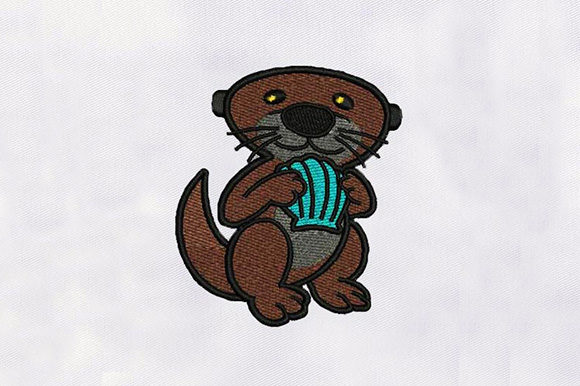
Otter with Seashell Design
A Gentle, Thoughtful Woodland Moment—Not Just Another Animal Motif
When I first opened the Otter with Seashell Design, I didn’t see a generic woodland animal. I saw a quiet narrative: an otter curled just so, one paw gently cradling a smooth, scalloped seashell. It’s soft without being saccharine, detailed without feeling fussy—and that balance is rare in machine embroidery designs. As someone who’s stitched hundreds of woodland-themed pieces for boutique clients and Etsy sellers, I immediately recognized its potential as more than decoration. It’s a mood-setter. It belongs on a linen tea towel folded beside a farmhouse sink, on a baby’s organic cotton onesie, or embroidered subtly on the chest of a neutral-toned sweatshirt for a coastal-meets-forest brand.
Where It Shines: Real Projects That Feel Intentional
I tested Otter with Seashell Design across three real-world uses: a medium-weight canvas tote bag (for a local gift shop), a 100% cotton baby blanket corner (for a personalized nursery order), and a structured twill apron (for a small-batch kitchen brand). In each case, the design held up beautifully—not because it’s technically flashy, but because its proportions and stitch rhythm suit functional handmade products. The seashell’s curves are rendered with gentle satin stitch, not aggressive fill; the otter’s face uses minimal running stitch for whiskers and eyes, avoiding tiny, fragile details that snag or blur on textured fabric. On the tote, it read clearly at 3.5" wide—no pixelation, no thread pooling. On the baby blanket, the low-to-moderate stitch density meant it stayed soft and washable. And on the apron? It added charm without compromising durability.
Where to Pause—Not Every Fabric or Format Fits Gracefully
This isn’t a “throw-it-on-anything” design—and that’s a strength, not a limitation. Avoid using Otter with Seashell Design on highly stretchy knits (like jersey t-shirts) without significant stabilizer testing; the gentle curves can distort if the base fabric gives too much. It also doesn’t scale well below 2.2"—so skip it for tiny cap fronts or micro-patches unless you’ve verified the smallest included size holds detail. On dark fabrics, test your thread colors carefully: light ecru or oatmeal thread reads warmly, but pure white can look harsh against charcoal or navy. And while it works on towels and linens, avoid dense terrycloth loops without tear-away backing—the seashell’s edge detail can catch and fuzz.
Design Integrity Meets Customer Trust
When a customer orders a personalized gift—say, a custom embroidered pillow cover with their child’s name and this otter—they’re buying more than stitching. They’re buying intention, warmth, and care. Otter with Seashell Design delivers that quietly. Its lack of cartoonish exaggeration makes it feel mature enough for adult gifting (think wedding favors or teacher appreciation), yet tender enough for baby items. I’ve seen similar designs fail because they lean too hard into “cute”—oversized eyes, exaggerated paws—but this one keeps its dignity. That translates directly to perceived value: buyers pay more for pieces that feel curated, not mass-produced. For Etsy sellers and small shop owners, that distinction builds repeat business.
Practical Notes from the Hoop—What You Should Actually Do Before Stitching
- Always test on scrap fabric first—especially if using textured weaves or blends. Note how the seashell’s satin stitch lies over the grain.
- Check thread color contrast in natural light *and* under warm indoor lighting. A thread that looks perfect on screen may mute on oat-colored linen.
- Review stitch density before hooping. This design avoids heavy fill areas, but confirm no section exceeds 12,000 stitches in a tight cluster—especially near the otter’s ear or shell rim.
- Confirm hoop size compatibility. While multiple file formats are included (PES, DST, VP3, HUS, and more), verify your machine’s max hoop dimensions match the largest version you intend to use.
- Inspect small details at 200% zoom in your embroidery software: the seashell’s inner curve, the otter’s paw placement, and subtle tail taper should all render cleanly.
- Test black-and-white mockups before finalizing product photos. This design gains clarity in monochrome—it’s a good sign for branding consistency.
- Use appropriate stabilizer: medium-weight cutaway for knits, tear-away for stable wovens, and soft tear-away + topping for towels.
- Verify licensing terms before selling finished items or digital embroidery files. The product description lists file formats—not usage rights—so always double-check what’s permitted for your craft business or commercial embroidery work.
Why It Works Beyond the Stitch Count
As a designer reviewing dozens of embroidery files weekly, I don’t just ask, “Does it stitch?” I ask, “Does it *belong*?” Otter with Seashell Design belongs on heirloom-quality baby blankets, on artisanal kitchen linens, on thoughtful holiday gifts wrapped in kraft paper and twine. It supports—rather than competes with—handmade presentation. It reinforces brand consistency for shops rooted in nature, mindfulness, or coastal calm. And for customers, it sparks recognition—not of a trend, but of a feeling: gentle curiosity, quiet joy, unhurried connection. That’s what turns a simple embroidered patch into a story worth sharing, a sweatshirt into a conversation starter, and a digital embroidery file into a trusted design asset.
Final Thought: A Design That Respects the Maker’s Time and the Buyer’s Heart
This isn’t a high-drama, attention-grabbing motif. It’s a steady, well-considered piece—like a favorite ceramic mug or a well-worn wooden spoon. Use it where subtlety matters. Where craftsmanship is felt, not shouted. Where the otter isn’t just an animal, but a quiet companion in everyday moments. And if you’re choosing embroidery file formats for your shop or studio, remember: versatility matters—but so does voice. Otter with Seashell Design has one. Let it speak for you.